

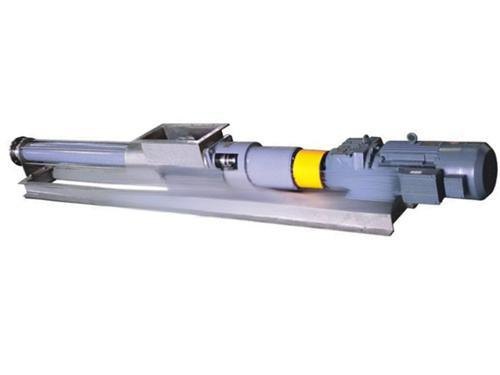
Why Sludge Screw Pumps Are Essential for Effective Municipal Waste Management
Municipal wastewater treatment generates large volumes of sludge—a semi-solid byproduct containing organic matter, inorganic particles, and microbial biomass. Efficient sludge handling is critical to prevent clogs, process disruptions, and environmental contamination. Sludge screw pumps (Progressive cavity pumps) are uniquely suited to this task, offering advantages tailored to the challenges of municipal waste management:
1. High Viscosity & Solids Tolerance
Municipal sludge ranges from thick primary sludge (high solids content) to viscous secondary or digested sludge. Screw pumps use a rotating helical rotor within a stationary stator to create progressing cavities, moving materials with viscosity up to 1,000,000 cP and solids loading up to 50% by weight. Unlike centrifugal pumps (prone to clogging with abrasive debris like grit or fibers), screw pumps maintain performance, reducing downtime in treatment plants.
2. Continuous, Pulsation-Free Flow
Municipal facilities require consistent sludge feed to downstream processes (thickening, digestion, dewatering). Screw pumps deliver steady flow proportional to rotor speed, enabling precise control. This predictability optimizes anaerobic digestion (stable microbial activity for biogas production) and ensures efficient treatment—key to sustainable waste management.
3. Self-Priming & Dry-Running Capability
Sludge often accumulates in low-lying tanks or contains air pockets. Screw pumps are self-priming (evacuate air without external priming) and can run dry briefly without damage. This is vital for municipal settings where temporary sludge shortages or process interruptions occur, minimizing pump failure risks.
4. Minimal Shear Force
Preserving sludge structure (e.g., microbial flocs in anaerobic digestion) is essential for treatment efficiency. Screw pumps operate at low speeds (50–300 RPM) with a gentle cavity transfer mechanism, reducing shear force. This maintains floc integrity, enhancing digestion performance and lowering energy use for subsequent steps.
5. Versatility Across Sludge Types
Municipal systems handle primary, secondary, digested, and dewatered sludge. Screw pumps adapt via adjustable rotor-stator configurations or speed, eliminating the need for multiple pump types. This simplifies operations and cuts capital/maintenance costs for public facilities.
6. Energy Efficiency
Low rotational speeds reduce energy consumption compared to high-speed centrifugal pumps (which struggle with viscous sludge). For daily large-volume sludge handling, these savings translate to long-term cost reductions and improved sustainability for municipal operations.
In summary, sludge screw pumps address core municipal sludge challenges—reliability, control, and efficiency—making them indispensable for safe, effective waste management and environmental protection.

Copyright ? Jiangsu Longjie Pump Manufacturing Co., Ltd.



 Phone
Phone
Comment
(0)